Diffirient Lounge
The Diffrient Lounge Chair represents Humanscale’s commitment to human-centered design. During my time as a Design Engineer Intern, I worked under a Design Engineer III to support the product through all phases of development.
Beyond daily engineering responsibilities such as part iteration, drawing updates, and cross-functional coordination, I took ownership of several high-impact projects that are highlighted below.

Tapered Bearing Test Jig
The Challenge:
The tapered bearing supporting the Lounge Chair needed to undergo cycle testing. However, the final tooled components were still in production.
The objective was to design and manufacture a jig that accurately replicated real-world loading conditions in parallel with production to decrease delays.

Design Strategy:
-
The jig mounted to a 5 star base for compatibility with internal test equipment
-
A 400 lb load replicated user + chair forces
-
The central post matched the final spindle geometry
-
A precision taper replicated the star base interface


Impact
-
Three full test cycles completed over three weeks
-
Bearing validation before tooling arrival
-
Decreased project timeline


Manufacturing
Full ownership from end to end
Key Aspects
-
Press-fit bearing race interfaces to mirror final assembly
-
Load distribution plate with wooden extension
-
Custom removal tool for rapid race extraction during repeated test cycles
Plastic Friction Ring
The Problem:
The tapered bearing allowed the 100+ lb chair to rotate too freely. The existing metal tolerance ring caused squeaking and required extensive break-in before smooth motion.
The goal was to design a plastic friction ring that delivered immediate smoothness, eliminated noise, and maintained long-term durability.

My Approach:
I prototyped multiple materials and geometries in-house, testing materials, interference and rotational feel.
Key Areas:
-
Plastic materials
-
Cross-section geometries and interference
-
Spindle redesign
-
Tolerance compensation
Machined prototypes used for UL test builds

The Solution:
Key Aspects
-
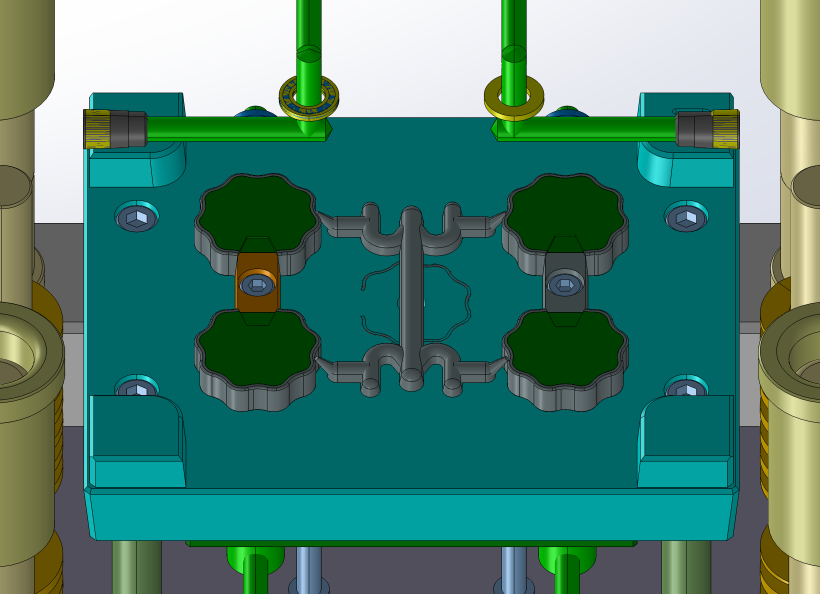
Wavy profile to absorb tolerance from contact surfaces
-
Oil-impregnated plastic for self-lubrication
-
Redesigned spindle for larger ring thickness for durability
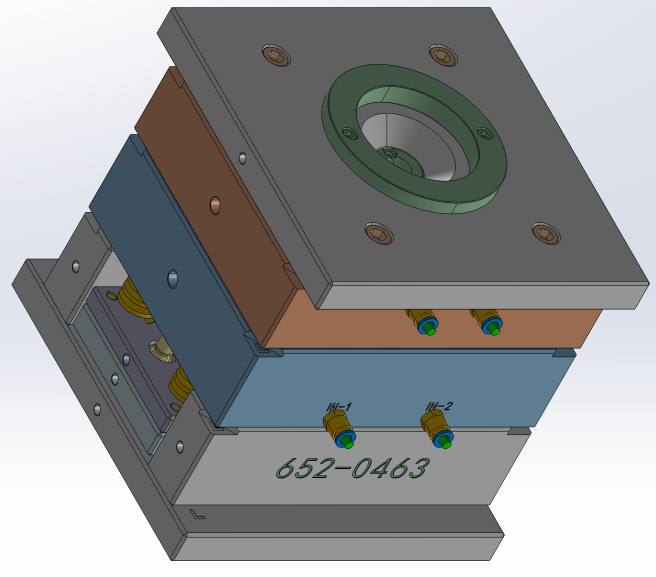
Design approved for production -> four-cavity injection mold

Impact:
-
Eliminated squeaking
-
Removed break-in cycles
-
Improved user and product feel
-
Production-ready tooling release
Gallery


